What is Apni Chat Apna Ghar Scheme and its Execution Models Status
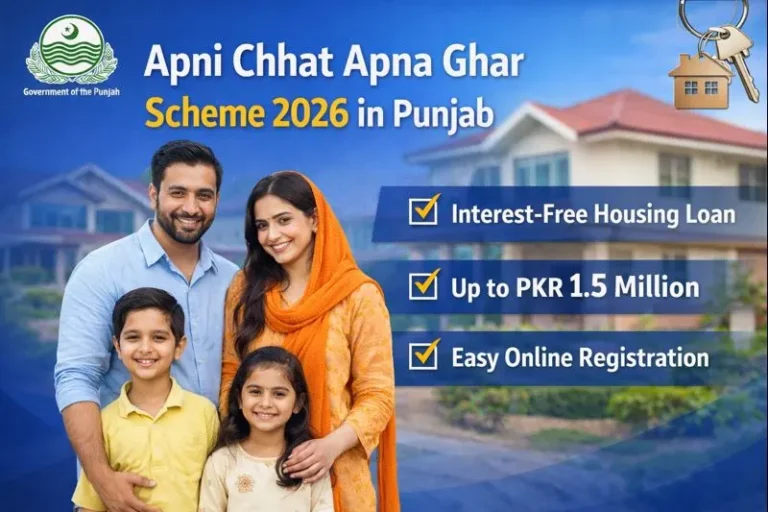
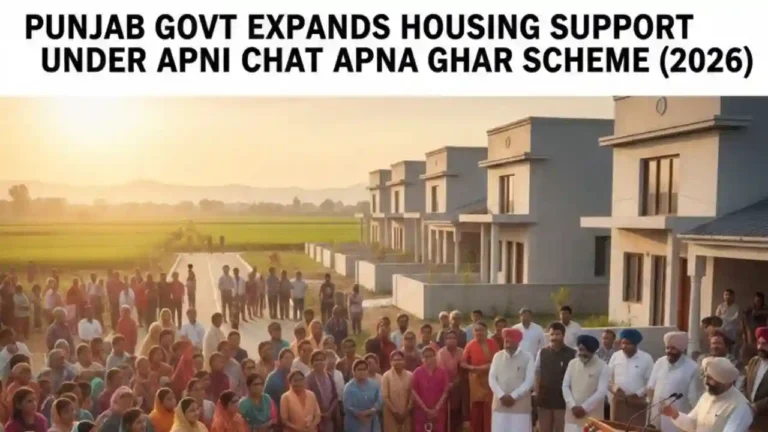
Apni Chat Apna Ghar Scheme is one of the most discussed public welfare initiatives launched by the Punjab government to address the long-standing housing shortage in the province. For decades, owning a house has remained out of reach for millions of families due to rising land prices, expensive construction costs, and limited access to formal housing finance. This scheme aims to change that reality by introducing multiple execution models instead of relying on a single approach.
Unlike older housing programs that focused only on plots or limited apartment projects, Apni Chat Apna Ghar is designed as a flexible framework. It allows the government to work directly, partner with private developers, and use existing public land in different ways. This post explains what Apni Chat Apna Ghar Scheme is, why it was introduced, and the current status of its execution models.
What Is Apni Chat Apna Ghar Scheme
Apni Chat Apna Ghar Scheme is a provincial housing program launched to provide affordable and secure housing units to deserving citizens of Punjab. The primary target groups include low-income households, salaried individuals, daily wage workers, widows, and people who do not own any residential property.
The core idea of the scheme is simple: instead of giving only financial assistance or plots, the government focuses on delivering ready or near-ready housing units. These units are offered at subsidized rates, with easy installment plans, and in some cases, partial government support on land or infrastructure costs.
Key objectives of the scheme include:
- Reducing the housing deficit in Punjab
- Promoting planned urban development
- Discouraging illegal housing societies
- Creating employment in the construction sector
- Improving living standards for low- and middle-income families
Check Also: How Does the Verification and Loan Approval Process Work in ACAG 2026
Why Multiple Execution Models Were Introduced
One major lesson learned from past housing schemes is that a single execution method cannot work across all districts and income groups. Urban centers like Lahore and Rawalpindi face different challenges compared to smaller cities and rural areas.
To overcome this, Apni Chat Apna Ghar Scheme uses multiple execution models. Each model is designed to suit a specific type of land, population density, and financial capacity of beneficiaries. This approach also reduces pressure on the government budget by involving private investment where possible.
Execution Model 1: Government-Owned Land Development
Under this model, the Punjab government uses its own available land to develop housing projects. Government departments, development authorities, and housing agencies identify unused or underutilized land and convert it into residential schemes.
In this model:
- Land cost is either zero or very low
- Government develops basic infrastructure such as roads, water, sewerage, and electricity
- Housing units are constructed directly or through contractors
- Units are allotted to eligible applicants through a transparent process
Current Status
This model is actively being used in major cities where government land is available. Several pilot projects have been launched, and construction work is ongoing in selected locations. Progress is steady but slower due to procurement processes and budget approvals.
Check Also: How Much Loan Is Offered Under Apni Chhat Apna Ghar Scheme 2026? (Complete Loan Details Guide)
Execution Model 2: Public-Private Partnership (PPP)
The public-private partnership model is considered one of the most important pillars of Apni Chat Apna Ghar Scheme. In this approach, private developers collaborate with the government to build affordable housing projects.
Typically:
- Government provides land or regulatory support
- Private developers handle construction and project management
- Housing units are sold at pre-approved prices
- Profit margins are capped to keep units affordable
This model helps reduce the financial burden on the government while speeding up project execution.
Current Status
Several private developers have shown interest in PPP projects. Memorandums of understanding have been signed in selected districts. While some projects are still in planning stages, others have moved to initial construction phases. Regulatory approvals and coordination remain key challenges.
Execution Model 3: Vertical Housing and Apartments
Due to land scarcity in large cities, Apni Chat Apna Ghar Scheme also promotes vertical housing in the form of apartments and flats. This model is especially relevant for Lahore, Faisalabad, and Rawalpindi.
Features include:
- Multi-story apartment buildings
- Smaller unit sizes to keep costs low
- Shared facilities and common spaces
- Priority for urban low-income families
Current Status
Apartment-based projects are under active development in selected urban areas. Design approvals and feasibility studies have been completed for multiple sites. Construction has started in some locations, while others are awaiting final clearances.
Execution Model 4: Subsidized Housing Through Financing Support
This model focuses on helping families who already own land but cannot afford construction. Instead of providing houses, the government facilitates access to low-cost financing.
Under this approach:
- Beneficiaries receive subsidized loans
- Markup rates are reduced through government support
- Construction standards are defined
- Monitoring ensures proper use of funds
Current Status
This model is in the early implementation stage. Coordination with banks and housing finance institutions is ongoing. Once fully operational, it is expected to benefit a large number of semi-urban and rural households.
Check Also: Who Is Eligible for the ACAG Punjab Housing Scheme 2026? (Complete Eligibility Guide)
Execution Model 5: Regularization and Redevelopment of Existing Settlements
In some cases, Apni Chat Apna Ghar Scheme also supports the redevelopment of existing informal or poorly planned settlements. Instead of relocation, the focus is on upgrading living conditions.
This includes:
- Legal recognition of settlements
- Infrastructure improvement
- Reconstruction of unsafe housing
- Community-based planning
Current Status
This model is being tested on a limited scale. Legal and land ownership complexities make it slower, but it holds long-term potential for inclusive urban development.
Eligibility and Allotment Mechanism
Although execution models differ, eligibility criteria remain broadly similar across projects. Applicants usually must:
- Be a resident of Punjab
- Not own a house or plot
- Belong to a defined income bracket
- Provide verifiable documentation
Allotment is typically done through computerized balloting or merit-based assessment to ensure transparency.
Challenges in Execution
Despite its strong vision, Apni Chat Apna Ghar Scheme faces several challenges:
- Limited availability of suitable land
- Rising construction material costs
- Coordination between departments
- Financing and cash flow constraints
- Managing demand expectations
Addressing these challenges requires consistent policy support and strong monitoring.
Overall Progress and Public Response
Public response to the scheme has been largely positive, especially among first-time homebuyers. The multi-model approach has increased confidence that the program can adapt to different needs. However, expectations remain high, and timely delivery will be critical to maintain trust.
Check Also: What Is the Apni Chhat Apna Ghar Scheme 2026 in Punjab?
Conclusion – What is Apni Chat Apna Ghar Scheme and its Execution Models Status
Apni Chat Apna Ghar Scheme represents a more mature and flexible approach to affordable housing in Punjab. By introducing multiple execution models, the government has increased its chances of success compared to past initiatives. While implementation is still evolving, the current status shows steady movement rather than mere announcements.
If execution remains transparent and consistent, Apni Chat Apna Ghar Scheme has the potential to become a long-term solution to Punjab’s housing crisis rather than a short-term relief program.